




Last updated: April 22, 2026. This page is reviewed quarterly. See our Editorial Policy for our update standard.
Canada has, by most reasonable measures, one of the deepest pools of foundational AI research in the world, and one of the shallowest pools of large AI companies. This page is the running reference on how that paradox is being resolved — through policy, capital, infrastructure, and the work of a few thousand people building, regulating, or buying AI in Canada. It is updated every quarter and meant to be linked to and quoted from. If something here is wrong or out of date, email us at [email protected].
The Canadian AI economy at a glance
Canada’s AI economy in 2026 is built on four pillars. Research: Mila in Montreal, the Vector Institute in Toronto, and Amii in Edmonton are still the centres of gravity for foundational AI work, anchored by the Pan-Canadian AI Strategy. Companies: Toronto-based Cohere remains the country’s flagship foundation-model lab; under it sits a long tail of vertical AI companies from coast to coast. Infrastructure: Canada is in the middle of a multi-year build-out of domestic AI data centres, with major commitments from Microsoft, NVIDIA-aligned partners like Hypertec, and provincial energy strategies in Alberta and Saskatchewan. Policy: with Bill C-27 dead, federal AI regulation is now arriving via the Treasury Board’s directive on automated decision-making, the Privacy Commissioner’s broad reading of PIPEDA, and a patchwork of provincial rules.
Why Canada matters in the global AI map
Three reasons. First, Canadian researchers — including Yoshua Bengio at Mila and Geoffrey Hinton’s lineage in Toronto — produced much of the foundational deep-learning work the current AI wave runs on. Second, Canada is one of the few jurisdictions outside the United States and China with a credible domestic foundation-model company in Cohere. Third, Canada is increasingly positioned as a sovereign AI alternative for North American enterprises that want a non-U.S. compute and data jurisdiction without leaving the continent. None of those advantages are guaranteed to compound, but they exist.
The companies you should know
Our running list of Canadian AI companies, organized by category, is maintained at Canadian AI Companies: The 2026 List. The shortest version: Cohere is the foundation-model lab; CentML is the inference-optimization story; Shopify is the largest Canadian public company shipping AI features at scale; Telus and BCE are the telcos with material AI roadmaps; and a long list of vertical AI startups — from Candidly in voice agents to Folkly in cultural archiving — are doing real work that gets less coverage than it should.
Policy, in one paragraph
Canada’s AI regulatory landscape is more developed than the press treatment suggests. With the AIDA Act dead, the binding rules in 2026 are: the Treasury Board’s Directive on Automated Decision-Making for federal departments and their vendors; Quebec’s Law 25 for any system handling Quebec residents’ data; the Privacy Commissioner’s interpretation of PIPEDA, which now extends to most generative AI deployments touching personal information; and Ontario’s quiet but real public-sector AI procurement guidance. The next federal AI bill, when it arrives, will likely tighten rather than loosen this landscape. Read our deeper explainer at Canadian AI Policy: The 2026 Reference and our piece on the AIDA Act.
The infrastructure story
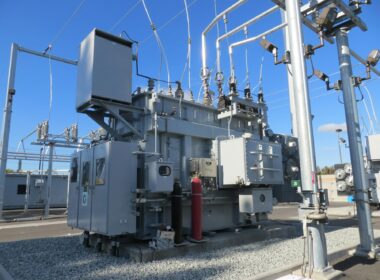
The single most important thing happening in Canadian AI in 2026 is not a model release or a funding round. It is the multi-billion-dollar build-out of domestic AI data centres — Microsoft’s $19 billion infrastructure commitment, the wave of Alberta data-centre investments, the $485M Moose Jaw project, and the emergence of Hypertec as Canada’s first NVIDIA OEM partner. Together these projects determine whether Canada has the compute to host its own AI economy or remains dependent on U.S. hyperscalers.
How to read AIMag’s coverage
This site is organized around five beats: news, policy, tools and how-to, opinion, and people. If you read one piece a week, read the Monday opinion column from Marcus Laporte on policy. If you’re a Canadian operator, the Thursday Harper Singh column covers the rollout-in-the-wild beat better than anything we publish. The full editorial team is on our masthead.
Sources & further reading
- Pan-Canadian AI Strategy — CIFAR
- OECD AI Policy Observatory — Canada
- AIDA Act — ISED
- Statistics Canada — Business use of AI
- Privacy Commissioner of Canada — AI
Where to go next on AI in Canada
This page is the overview. Three references go deeper, and each one is kept current rather than replaced.
- AI for business in Canada, for adoption, return on investment, buying and agents.
- Canadian AI policy, for legislation, privacy, procurement and governance.
- AI data centres in Canada, for infrastructure, power and sovereignty.
The numbers people ask for most
- AI Adoption in Canada Tripled in Two Years to One in Five
- The AI Adoption Gap Runs Between Your Desk and Your Company
- Why Only 2% of Canadian Businesses Are Making Money From AI
- The Shadow AI Number Everyone Quotes Is a Year Old