




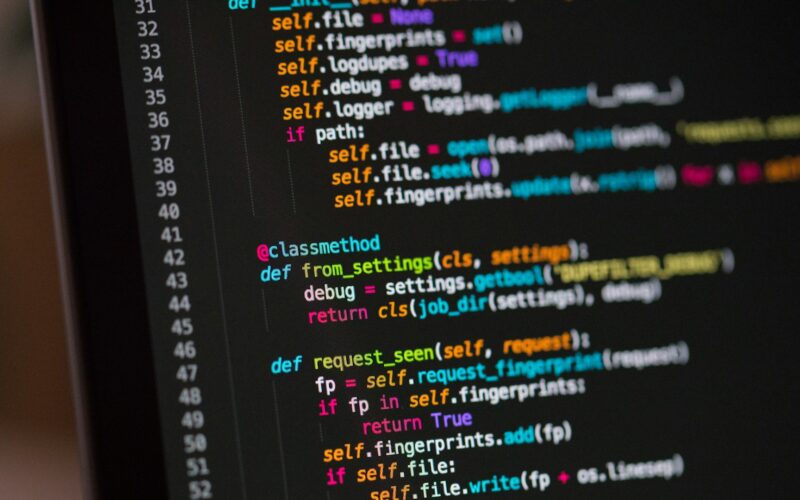
Anyone can now build a working internal tool in an afternoon. Keeping it running after its builder moves on is the part owners skip.
Key takeaways
- Internal AI builds succeed about a third as often as bought tools, per MIT NANDA’s 2025 research.
- Vibe coding makes the build cheap and the handoff expensive.
- Five habits turn a weekend build into something a colleague can run.
Picture a familiar scene. Someone on your team uses Claude or ChatGPT to build a quote calculator over a weekend, and vibe coding business tools like this now takes hours instead of a contractor’s invoice. It works. Three months later the builder leaves, the new price list breaks it, and nobody can open the hood.
That is where most AI pilots die. Not in the demo. At the handoff.
TL;DR
- MIT NANDA’s 2025 study found about 5% of generative AI pilots delivered rapid revenue gains.
- Tools bought from specialised vendors succeeded about 67% of the time. Internal builds managed about a third as often.
- Statistics Canada says 19.2% of Canadian businesses used AI in the year to Q2 2026, up from 6.1% two years earlier.
- The fix is a handoff kit: a spec, version history, a test set, an owner and an off switch.
Why do internal AI pilots fail?
Most fail because the tool never learns the workflow around it and nobody owns it once the builder moves on. MIT NANDA’s 2025 report, The GenAI Divide, drew on 150 leader interviews, 350 employee surveys and 300 public deployments. It found the problem sat in how organisations adopt tools, not in model quality.
The split that matters for owners is buy against build. Tools purchased from specialised vendors succeeded about 67% of the time, according to the report. Internal builds succeeded about a third as often. Vibe coding lowers the cost of building, which means more internal builds, which means more of the weaker category.
Builders have noticed. Actionable AI’s guide to the vibecoder-to-engineer gap lists 25 concepts, among them worktrees, specs and harnesses, that separate someone who prompts from someone who ships. Most owners won’t learn 25 concepts. They don’t need to. They need the five that decide whether a tool survives its maker.
Why it matters in Canada
Canadian adoption is climbing fast, and much of it sits in firms with no engineer to hand anything to. Statistics Canada reported in June 2026 that 19.2% of businesses used AI in the prior 12 months, including 19.9% of firms with one to four employees. In a four-person company, the builder is the IT department.
The same release found 44.4% of AI-using businesses changed training or staffing, and training existing staff was the most common change at 32.0%. Owners are already investing in people. Point some of that training at maintenance, not only at prompting.
What does a failed handoff cost?
There is no Canadian data on vibe-coded tools that break, so treat this as analysis. The cost is rarely the rebuild. It is the quotes sent at last year’s prices, the invoice run that silently skipped a customer, or the spreadsheet that fed a bad number into a bank covenant report. The tool was free. The error wasn’t.
What should leaders do next?
- Write the spec before the prompt. One page: what the tool does, what it must never do, and three examples of correct output.
- Put the code in version control. A free private GitHub or GitLab repository gives every change a history and a way back.
- Keep a test set. Ten to twenty real cases with known right answers, rerun after every change. That is your harness.
- Name an owner and a backup. If only the builder can run it, it is a liability with a nice interface.
- Keep secrets out of the code. API keys and customer data belong in a password manager or environment settings, never pasted into a prompt.
- Write down the off switch. How do you turn it off and go back to the manual process by lunchtime?
We made a related case about maintaining AI agents after launch, and about why Canadian AI pilots stall without redesigned workflows. Both point to the same gap. More how-to pieces sit in our practical AI tips.
The sceptic’s view
The best argument against all this is speed. The whole appeal of vibe coding is that a tool costs an afternoon, so if it breaks you build another. Wrapping a weekend project in specs and test sets kills the thing that made it worth doing.
For a personal shortcut, that’s right. Skip the kit. The line is simple: the moment a tool touches prices, pay, money or customer data, the kit costs less than one bad week.
What to watch
- Statistics Canada’s next Canadian Survey on Business Conditions release on AI use, expected before the end of 2026. Watch the share of small firms reporting skills as a barrier.
- Whether the AI coding tools add built-in handoff features, such as auto-generated specs and test sets, by 31 December 2026. Our forecast: at least one major one will.
FAQ
What is vibe coding?
Vibe coding means building software by describing what you want to an AI model and accepting the code it writes, often without reading that code closely. It is fast, and it is how many small teams now build internal tools.
Is vibe coding safe for a small business?
For personal tools, mostly yes. Once a vibe-coded tool touches pricing, payroll or customer data, it needs a written spec, version control, a test set and a named owner before anyone else relies on it.
Should we build an AI tool or buy one?
Buy when a proven product fits the job. MIT NANDA found in 2025 that tools bought from specialised vendors succeeded about 67% of the time, while internal builds succeeded about a third as often.
Closing analysis
Vibe coding solved the part of software that was never the bottleneck for small firms. Writing the first version was always cheap next to keeping it alive. Build the handoff kit before the tool matters, because afterwards is too late.
Written by the AI Magazine Canada team, reviewed by the AI Magazine Canada editorial team.
Disclosure
The author has no relevant financial, advisory, or board relationships with any party named in this column.