




A billion-dollar play to secure Canada’s digital sovereignty
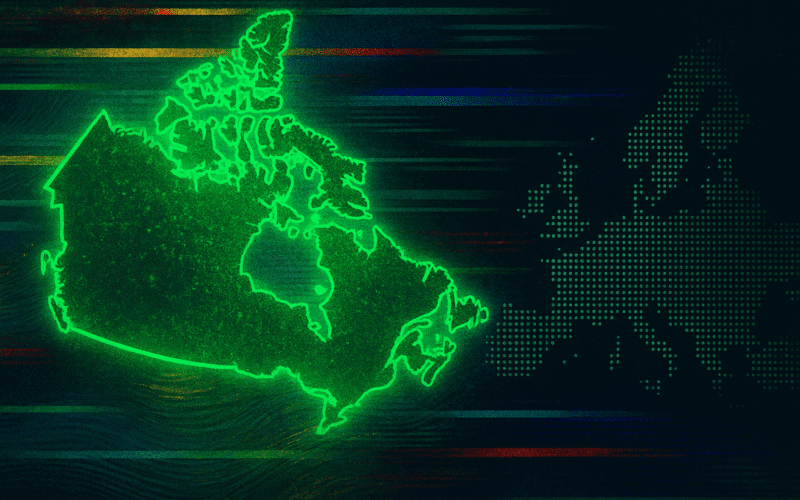
Something changed in Ottawa this November. For the first time in years, a federal budget mentioned teraflops, not just taxes. Prime Minister Mark Carney’s government dropped a landmark $1 billion plan to supercharge artificial intelligence and quantum computing and the numbers mean business.
This is not another research grant or think-tank study. This is industrial policy retooled for the algorithm age.
The start of a sovereign compute movement
The federal plan sets aside more than a billion dollars over five years to develop a sovereign AI compute network, giving both public and private sectors access to advanced computing within Canadian borders.
That single phrase, sovereign compute, marks a philosophical shift. It means no longer relying on rented infrastructure in Oregon or Dublin. It means hosting Canada’s intelligence, innovation, and data on Canadian soil.
For startups, researchers, and provincial governments, that changes everything. The country’s largest AI labs in Toronto, Montreal, Edmonton, and Vancouver will soon have domestic options for training large models. Cloud costs drop. Data privacy tightens. Sovereignty becomes tangible.
Federal ministries like Transport, Justice, and Health are next in line. Ottawa wants its own departments to use generative systems for workflow automation, analysis, and service delivery. What was once pilot experimentation becomes official government infrastructure.
Quantum computing joins the national agenda
Quantum technology finally gets its policy moment. Hundreds of millions from the same budget are being directed toward quantum AI startups and applied research programs, focusing on defense, materials, and secure communications.
Canada already holds a strong foothold in quantum science through institutions like the Perimeter Institute and D-Wave in British Columbia. This funding cements that advantage, positioning Canada as one of the few countries blending quantum hardware, AI software, and industrial energy policy into a single innovation stream.
Quantum integration means faster optimization problems, better cybersecurity, and potentially a future where AI models train exponentially faster on quantum-assisted nodes.
In short, Ottawa is betting that compute capacity is the new national power grid.
The AI Strategy Task Force steps in
The government’s new AI Strategy Task Force will translate these ambitions into policy and action. Formed after a 30-day national consultation that ended in October, the task force now holds the pen on the next Canadian AI Strategy.
Expect its recommendations to circle around five themes:
Expanding research and development capacity.
Helping Canadian AI companies scale globally.
Building public trust through regulation and transparency.
Ensuring digital sovereignty through infrastructure.
Integrating AI across federal operations for efficiency and accountability.
For once, Canada’s AI story is not only about ethics and risk. It’s about compute, competition, and capacity ,the hardware backbone behind the software hype.
Industry debates and public scrutiny
Public feedback has been passionate. Academics warn against corporate capture of research funding. Industry leaders argue Canada cannot compete globally without massive scale. Civil society groups press for transparency, accountability, and strong safeguards against misuse.
Even within these tensions, the consultation showed one shared belief: AI must remain both responsible and sovereign.
The government’s balancing act will be delicate. Move too fast, and critics will call it reckless automation. Move too slow, and Canada loses ground to the United States and Europe, where infrastructure races are already underway.
Alberta and Ontario emerge as power players
While Ottawa writes the cheques, the real action is regional. Alberta, already Canada’s energy capital, is positioning itself as the compute capital. Massive data-centre projects near Calgary and Edmonton have applied for over 18 000 MW in grid capacity — the equivalent power of 18 million homes.
At the same time, Ontario’s tech corridor between Toronto and Waterloo continues to anchor the country’s AI research. Montreal leads in ethics and model design, while British Columbia develops quantum hardware. The provinces, once rivals, now operate as a distributed national system, each providing part of Canada’s digital muscle.
This is what a federated AI infrastructure looks like.
The growing list of AI milestones
The momentum is not just fiscal. Across the country, new developments are surfacing weekly:
Medical innovation: AI-powered surgical tools in Montreal can now detect cancerous tissue in real time, cutting surgical errors and improving survival rates.
Public services: Transport Canada has begun testing AI models to optimize inspection routes and logistics.
Agriculture and energy: Alberta startups use edge computing to analyze flared-gas patterns and redirect waste energy to local compute clusters.
Education: Provincial colleges plan to add data-centre operations programs to train hundreds of technicians.
Every example points to one thing: Canada’s AI economy is moving from labs to infrastructure.
Conferences that mirror the momentum
November reads like a festival of code.
qConnect 2025 in Calgary brings together Canada’s quantum and AI scientists under one roof.
IEEE’s Collaborative Advances Conference in Toronto runs November 10–13, focusing on AI in software engineering.
The Agentic AI Summit later this month will draw global firms to Toronto to debate large-scale AI deployment.
For years, AI events in Canada felt academic. Now they feel industrial. Deals are being signed in hotel lobbies, not just papered in journals.
Why this moment matters
This budget and strategy are more than bureaucratic housekeeping. They mark Canada’s entrance into the compute race that defines global technology for the next decade.
Sovereign infrastructure is not a vanity project. It is a defensive and economic necessity. Without it, Canadian data lives elsewhere, Canadian researchers rent access from foreign clouds, and Canadian security depends on foreign compliance.
With it, Canada owns its digital future.
The challenges that remain
Building sovereign AI infrastructure will not be simple.
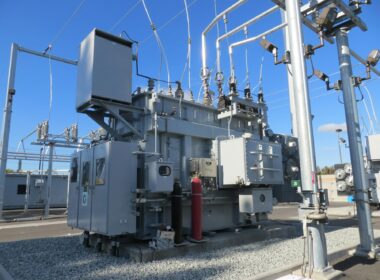
The national grid must handle surges in electricity demand.
Data-centre operators will need renewable power integration.
Workforce development is urgent; the country requires thousands of trained engineers and operators.
Privacy and misinformation issues still demand policy guardrails.
But Canada has a head start. The public is engaged, industry is invested, and the political will finally matches the rhetoric.
Our view from the magazine floor
We have watched governments announce AI funding before. This one feels heavier — as if Ottawa has finally accepted that intelligence, not oil, will fuel the next century.
One billion dollars is a statement of intent. It tells the world that Canada is done being polite on the sidelines. We are building servers, not just slides.
From the noisy lobbies of qConnect to the committee rooms of Parliament, you can feel it. The air hums with the sound of GPUs, not slogans.
Conclusion
If the plan succeeds, the next time someone talks about Canadian exports, they might not mention crude or grain. They might talk about computation.
Because beneath all the press releases and promises, the message is clear. Canada is not only building AI. Canada is building the infrastructure of intelligence itself.
AI Magazine Canada, chronicling the country’s next industrial revolution, one algorithm at a time.
More in the same thread on our Canadian AI policy reference.