




AI Tool Fatigue and the Business AI Switchboard

Businesses keep adding AI models, agents and automations, but someone still has to connect them. That hidden coordination is creating a new form of AI tool fatigue.

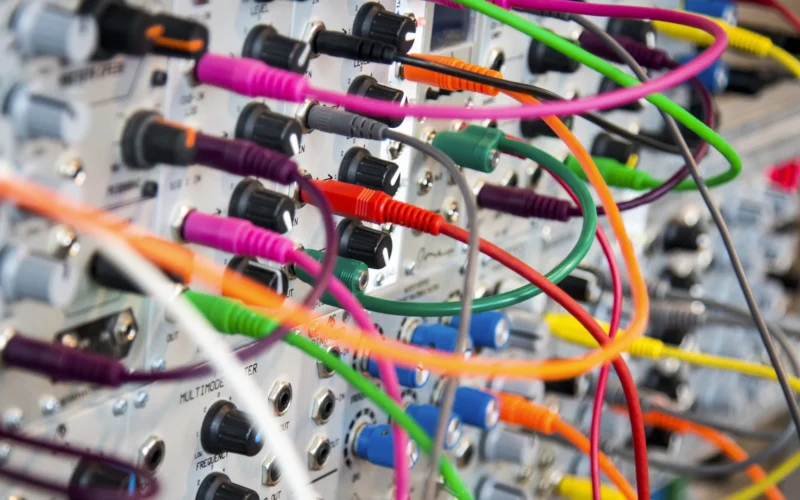
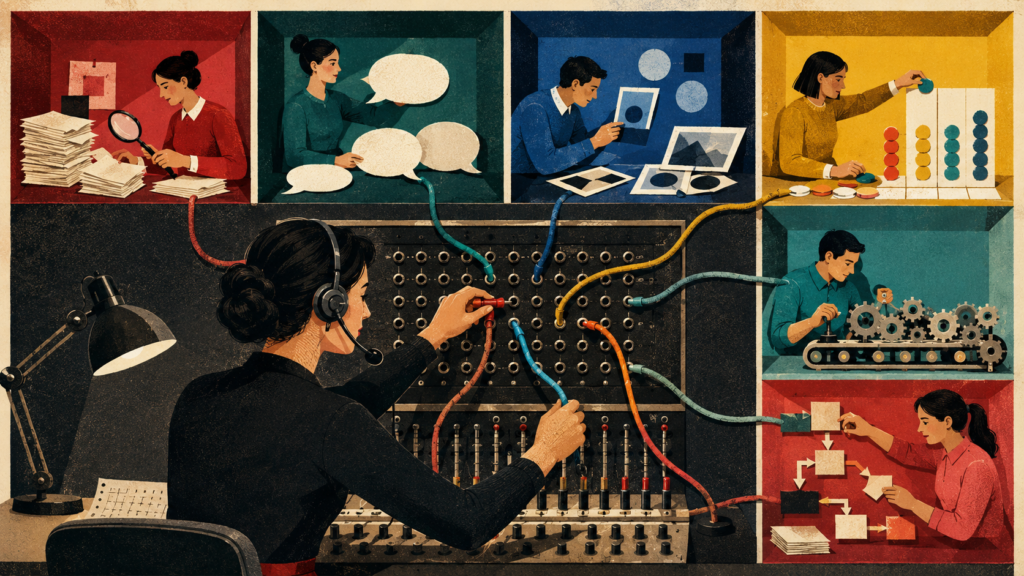
AI tool fatigue is starting to feel like standing in front of an old telephone switchboard.

One request comes in. You connect it to one model. Another task needs a different model. Research goes here. Writing goes there. An image model handles the visual. An automation moves the result. An agent checks what happened. Another system stores it.

Then something fails, and you become the switchboard operator again.

I use different AI models for different kinds of work. Many people who work closely with AI do the same. One model may be stronger at research. Another may write with better judgment. Another handles code, images, long documents or data analysis more reliably.

There is no single model that wins every task.

That freedom is useful. It is also becoming exhausting.
We were promised less work

The pitch behind workplace AI was simple: save time.

In many cases, it does. OpenAI reported in 2025 that surveyed enterprise users saved an average of 40 to 60 minutes per day. It also found that 75% believed AI improved the speed or quality of their work.

But those gains do not account for every minute spent deciding:

  • Which model should I use?
  • Should I use regular chat or deep research?
  • Does this require an agent?
  • Which app has the latest file?
  • Did the automation run?
  • Which subscription includes this feature?
  • Can I put company data into this system?
  • Why did this model produce a different answer yesterday?

This is the hidden work of AI adoption.

The output may take 30 seconds. Choosing, prompting, checking, moving and correcting it can take 20 minutes.

The switchboard operator never disappeared

Early telephone switchboards connected calls through a central operator. The caller did not need to understand the wiring. The operator received the request, found the right destination and made the connection.

That is close to where AI is heading.

Right now, many of us are acting as our own operators. We receive the task, judge its complexity, choose a model, provide context, connect other tools and inspect the result.

The growing list might include language models, search tools, image generators, meeting assistants, transcription software, workflow automations and specialized agents.

Each product can be useful on its own. Together, they can create a new management job.

You wanted help writing a proposal. You ended up comparing three models, copying context between two apps and checking which one invented a source.

You wanted meeting notes. You spent time reviewing permissions, cleaning the transcript and moving tasks into your project system.

You wanted an automated workflow. Now someone has to watch the automation.

We have reduced the labour inside certain tasks while adding labour around them.

One model for everything is the wrong answer

The obvious response would be to choose one AI platform and force everything through it.

That sounds tidy. It also ignores how AI systems actually perform.

A short customer-service classification does not need the same computing power as a contract review. A basic summary does not need the same reasoning capacity as a financial scenario. Image analysis, software development and document research each place different demands on a model.

Using the largest model for every request can increase cost and response time without producing a meaningful improvement. Using a small model for complex work can lower the quality of the result.


Microsoft’s model-routing guidance now treats this as an operating problem. Its system can examine a request and select a model based on cost, quality and task difficulty. Microsoft still advises companies to test the router against their own workloads and monitor which models handle the requests.

Snowflake and NVIDIA have also introduced routing systems designed to send different AI workloads to different models. The direction is becoming clear. The future may involve many models, but users should not have to select one manually every time.

The switchboard stays. The operator moves into the system.

AI choice is becoming its own form of work

Business software already asks people to manage too many tabs, notifications, logins and dashboards. AI can make that problem worse because the products change so quickly.

A model that performed well three months ago may no longer be the best fit. Pricing changes. Features move between plans. New versions appear. Agents gain new permissions. Integrations stop working.

The pressure to keep up creates a predictable pattern:

  1. Someone sees a new AI tool.
  2. The company runs a trial.
  3. A few employees adopt it.
  4. Another department buys something similar.
  5. Work gets split across several systems.
  6. Nobody can clearly explain the cost, risk or result.

That is not an AI strategy. It is a collection of subscriptions.

The Stanford AI Index found that 88% of surveyed organizations used AI in 2025, while the use of AI agents remained early. Adoption is rising faster than many companies can redesign their work around it.

Canada shows a similar gap between interest and operational maturity. Statistics Canada reported that 19.2% of businesses used AI to produce goods or deliver services in the second quarter of 2026. That was triple the 6.1% recorded two years earlier. Cybersecurity, privacy and cost remained reported barriers.

Buying access is the easy part. Deciding where AI belongs takes more work.

The real question is where the call should go

Most companies do not need a debate about which AI model is smartest.

They need clear answers to smaller questions:

  • Which tasks happen often enough to improve?
  • Which tasks contain sensitive information?
  • Where does accuracy matter most?
  • Where is speed more important than deep reasoning?
  • What can run automatically?
  • What still requires human approval?
  • How will the company measure time, cost and error rates?

Once those questions have answers, model selection becomes much simpler.

A low-risk internal summary may go to a fast, inexpensive model. A customer-facing document may require a stronger model and human review. Sensitive work may need an approved private environment. A repetitive process may suit an agent, but only with defined permissions and a record of its actions.

The model matters. The design of the work matters more.

A better AI switchboard

A useful business AI system should feel less like a shelf full of tools and more like a well-run switchboard.

The person starts with the task. The system handles much of the routing.

That system should know:

  • Which models the company has approved
  • What information each model can receive
  • Which tasks require higher accuracy
  • When a less expensive model is sufficient
  • When an agent can take action
  • When a person must approve the result
  • Where activity, cost and outcomes get recorded

This does not require building a large technical platform on day one.

A small company can start with one approved AI workspace, a short list of repeatable tasks and simple rules for sensitive information. A larger organization may need a governed routing layer that connects several models, internal data sources and agents.

The size changes. The principle does not.

Employees should not carry the full burden of choosing and connecting every AI component.

What to do before adding another AI tool

Before approving the next subscription, ask five questions.

1. What existing task will it replace or improve?

“Helping people work faster” is too broad. Name the task, its current time requirement and the expected result.

2. Do we already own this capability?

Many companies buy separate AI products for features already included in existing software.

3. Where will the output go?

If employees must copy the result into three other systems, the tool may create another step rather than remove one.

4. Who checks the work?

Define the review point before an agent or automation reaches customers, employees, financial records or operational systems.

5. What will we stop using?

Every new AI tool should trigger a deletion decision. If nothing leaves, complexity keeps accumulating.

The skeptic’s view

Some people will argue that the market will settle and one dominant AI assistant will absorb most of these functions.

That may happen at the interface level. One chat window could become the place where people begin most tasks.

Behind that window, the system may still rely on several models, tools and data sources. A single interface does not necessarily mean a single model.

Others may argue that users should simply learn which model performs each task best. That works for enthusiasts and technical teams. It does not scale well across an organization where most people have other jobs to do.

People should learn how to judge an AI result. They should not need to study model rankings every week to complete routine work.

We need fewer AI decisions

The AI switchboard metaphor points to a larger problem.

We have focused heavily on what each model can do. We have spent less time considering the mental cost of choosing between them.

The next stage of AI adoption will not be won by the company with the longest tool list. It will favour companies that reduce the number of decisions between a person’s intent and a useful result.

Several models may sit behind that system. Agents may handle parts of the work. Automations may carry information from one step to the next.

The person should not feel like they are plugging cables into a wall all day.

Good AI implementation gives people fewer connections to manage and fewer reasons to think about the machinery behind the work.

That is the switchboard we should be building.

Frequently asked questions

What is AI tool fatigue?

AI tool fatigue is the time and mental effort spent choosing, learning, checking and switching between AI products. It grows when an organization adopts tools without clear roles, standards or ownership.

Should a company use several AI models?

Several models can make sense when tasks differ in complexity, cost, privacy or format. The company should limit the approved selection and define how each model gets used.

What is AI model routing?

AI model routing sends each request to an approved model based on factors such as task difficulty, cost, speed and quality. It can reduce the need for employees to choose a model manually.

What is the difference between an AI model, agent and automation?

An AI model generates or analyzes information. An agent uses a model to complete steps and interact with tools. An automation moves work through predefined rules. A business system may use all three.

How can a company reduce AI tool sprawl?

Start with work, not products. Audit current tools, remove duplicated functions, approve a smaller toolset and measure the outcome of each AI workflow.

Sources

Total
0
Shares
Prev
The AI Museum May Arrive Sooner Than We Think

The AI Museum May Arrive Sooner Than We Think

AI model preservation may sound like work for historians in 2046

You May Also Like