

More than $50 billion sits in Saskatchewan’s data centre headline. The headline adds two deals together, and only one of them has a construction crew. On September 14, 2026, Bell and the Government of Saskatchewan announced a major expansion of the Bell AI Fabric campus in the RM of Sherwood, outside Regina. The combined project’s total estimated capital came to more than $50 billion.
The short answer. Bell is building a 300 MW campus outside Regina, fed from the provincial grid, with first data halls targeted for early 2027. On September 14 the province and Bell added a second, larger plan on top of it. The expansion runs to up to 900 MW, all of it supplied by Bell itself under Saskatchewan’s Bring Your Own Power principle. At full buildout the site reaches a possible 1.2 GW. The expansion rests on a non-binding memorandum, one step short of a final investment decision, and it still depends on customer commitments, permits, approvals and environmental assessments.
The province’s own release states the combined total two ways: more than $50 billion in its summary, and $52 billion inside a minister’s statement. A figure that moves by $2 billion inside one document is an estimate for a finished buildout, and the two deals deserve separate prices.
- What is actually under construction outside Regina?
- What did the September memorandum actually add?
- Why must the next 900 MW bring its own power?
- Which dates turn the promise into a build?
What is actually under construction outside Regina?
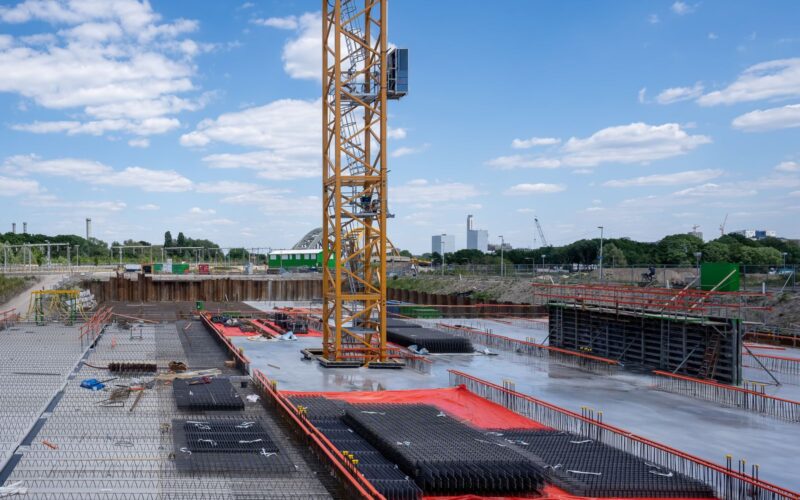
The campus sits in the RM of Sherwood, at Regina’s edge, and its first phase was under way before the September announcement enlarged it. That phase draws 300 MW from the provincial grid, supplied by SaskPower, and its first data halls are targeted for early 2027. The tenants are already named: Cerebras and CoreWeave are attached to the campus in the public record. A lender asks for four things first: a site, a power supply, a construction schedule and named customers. This phase has all four, and it stands on its own financing logic. Whatever happens to the expansion, Saskatchewan holds this build. Every larger figure in the story should be discounted against it.
What did the September memorandum actually add?
The September 14 signing added a second project on top of the first, and the province’s release is careful about its legal weight. Bell and the province signed a non-binding memorandum covering an expansion of up to 900 MW of further capacity. At full buildout the campus would reach 1.2 GW. Its power comes from Bell itself, through partner-built natural gas generation, under the province’s Bring Your Own Power principle. The same announcement placed the headquarters of Bell AI Fabric in Saskatchewan, with about 100 management positions attached to it. The release hangs its jobs expectations on the second deal as well: as many as 500 permanent positions running the halls and the power plants. Another roughly 3,000 people would keep the site secure, supplied and maintained. Every figure in that count is written as an expectation. Municipal permitting still applies to the build, and an environmental assessment may apply beside it. A memorandum of this kind records intent, sequence and conditions, and it commits no capital.
Why must the next 900 MW bring its own power?
Saskatchewan wrote that condition into the gate before this project reached it. The province released its Data Centre Framework in August 2026 and approved the Bell expansion under it in September. Three of the framework’s tests do the work in this story: Canadian control with a headquarters in the country, local jobs and partnerships, and power the project brings itself. The remaining tests cover data sovereignty, operating experience and a single provincial intake. The grid carries the first 300 MW because the project was admitted at that size. Every megawatt past it must arrive with its own generation behind it, which is why the expansion runs on partner-built gas. Ottawa’s federal principles, published eleven days earlier, asked builders to keep a project’s electricity costs from shifting onto Canadians. Saskatchewan’s framework turns the same concern into a condition every project must meet. Alberta prices the identical choice from the other direction. Its data centre levy runs at 2% of computing equipment value for grid-connected campuses. It falls to 1% where a campus generates its own power, and reaches 0% for power kept off the grid entirely (Alberta’s data centre levy can drop to 0%. The host town can’t tax the servers). One province caps the grid draw, and the other charges for it. Both have concluded that spare grid capacity is already spoken for. (Ottawa Set Five Expectations for Data Centres. The Switches Sit Elsewhere.)
Which dates turn the promise into a build?
The money question in this story is never whether the headline sounds large. It is which parts of the figure survive contact with a calendar. Four dated tests will settle it. The first halls are due in early 2027, and that date belongs to the real build. A final investment decision on the expansion would convert the memorandum into committed capital, and no such decision sits in the September record. Named generation partners would show who finances the 900 MW of self-supplied power. The permits, with anyenvironmental assessment the province requires, would clear the last public conditions on the file. Alberta’s queue faces the parallel test this fall, when its bring-your-own-generation intake window opens for the projects waiting behind its allocated room. Until one of those dates lands, the checked figure stays the one already in the ground: 300 MW under construction. Alberta’s Queue Asked for 19,565 MW. Six Weeks Will Decide Who Brought Power.
Price the announcement the way a lender prices a loan file, line by line. The build line is strong: a 300 MW construction project, a headquarters commitment and the country’s first working data centre framework make a consequential September. The memorandum line prices as an option on that build, worth a fraction of the headline until its conditions land.
Recap. Bell’s Saskatchewan campus is under construction at 300 MW, grid-fed, with first halls due in early 2027 and named tenants. The September 14 memorandum adds a possible 900 MW more, self-powered, on unmet conditions. The more than $50 billion total prices both deals together; read separately, the build is real now and the expansion is a well-documented intention.
Read the record this build now sits on: Canada’s data centre map: what is built, what is blocked, what is waiting.