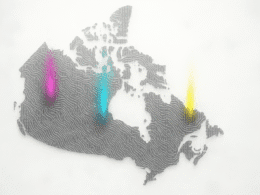






Canada’s best-known AI company is about to have two headquarters and two sets of national rules. For the businesses buying from it, sovereignty just moved from the brochure into the contract.
Cohere signed a definitive agreement on 16 September 2026 to combine with Germany’s Aleph Alpha, creating what the companies call the first transatlantic sovereign AI solution, headquartered in Toronto and Berlin. For sovereign AI in Canada, that changes the question. A vendor’s nationality no longer answers it. The contract does.
TL;DR
- Cohere and Aleph Alpha announced a definitive business combination on 16 September 2026, still subject to regulatory approval and expected to close later this year.
- The combined company will operate as Cohere, with more than 1,000 employees and dual headquarters in Berlin and Toronto.
- Cohere says it will operate within the legal frameworks of both countries. That is two jurisdictions, and a buyer should know which one covers their data.
- The Privacy Commissioner’s guidance already makes you accountable for personal information you send to any processor, Canadian or not.
- Ask four contract questions before you treat any AI vendor as sovereign.
What happened with Cohere and Aleph Alpha?
Cohere and Heidelberg-based Aleph Alpha signed a definitive agreement to combine, operating globally under the Cohere name. The deal needs regulatory approval and is expected to close later in 2026. Aleph Alpha’s co-CEO becomes Cohere’s chief operating officer, and its Heidelberg office stays as a research centre.
The joint release, datelined Toronto and Heidelberg, puts combined headcount above 1,000. Aleph Alpha brings about 200 people. Cohere also says it will deepen its partnership with Schwarz Group to deliver sovereign AI on STACKIT, Schwarz’s European cloud.
For Canada’s AI sector, it’s a big deal. A Toronto company is buying scale and European government relationships in one move.
Why does it matter in Canada?
Because many Canadian buyers pick Cohere partly for the flag. After this deal, the flag is shared. Cohere’s own announcement says the company will work within the legal and regulatory frameworks of both Canada and Germany. So “Canadian AI” now needs a follow-up question: processed where, under whose law?
This is the contrarian read. Most coverage frames the merger as a win for sovereignty. For a Canadian customer, it’s a reminder that sovereignty lives in three places: where your data sits, who can access it and what your contract says. The vendor’s passport sits outside all three.
That’s also where Canadian privacy rules already point. The Office of the Privacy Commissioner’s guidelines for processing personal data across borders say an organization stays responsible for personal information it transfers to a third party for processing. They expect contracts that provide comparable protection, and they expect you to tell people when their data may be processed in another country.
None of that depends on where your AI vendor has its head office.
What does this mean for a business buying AI?
Very little changes today, and nothing should change without a contract review. The deal hasn’t closed. Existing Cohere agreements carry on. The work is to confirm, in writing, where your data is processed and stored, and what happens to that after the combined company reorganizes.
For a 50-person firm using AI on customer records, four questions do the job:
- Where is our data processed and stored? Get the country and the provider, including any cloud partner.
- Which entity signs our contract after the deal closes? A Canadian entity, a German one, or a new parent.
- Can a foreign authority compel access to our data? Ask for the vendor’s written position.
- What notice do we get if any of the above changes? Thirty days in writing is a reasonable ask.
Ask the same four of every AI vendor, Cohere included. A US vendor with a Canadian data centre can score better on question one and worse on question three.
The skeptic’s view
A fair counterpoint: a larger Cohere with European government customers is better for Canadian buyers, not worse. It’s more likely to survive, invest in security and win certifications. Germany’s data protection culture is strict, and a joint company answering to both regimes may end up with tighter controls than either alone.
That may prove true. Buyers should still get it as a written term, and that’s the point.
What to watch
- Deal close, expected later in 2026. Watch for which entity holds Canadian customer contracts and any updated data processing terms.
- Next 90 days. Product and integration details, which the companies say will follow the close.
- Your next renewal. How the vendor answers the four questions above, in writing.
Our prediction: within 90 days of closing, Cohere publishes updated data processing terms that name a data location for Canadian customers. If it doesn’t, expect regulated Canadian buyers to ask for it.
FAQ
Is Cohere still a Canadian company after the Aleph Alpha deal?
The combined company will operate as Cohere with dual headquarters in Toronto and Berlin, according to Cohere’s announcement of 16 September 2026. The deal is subject to regulatory approval.
When will the Cohere and Aleph Alpha deal close?
The companies say the transaction is expected to close later in 2026, subject to final regulatory approvals.
What does sovereign AI mean for a Canadian business?
In practice it means knowing where your data is processed and stored, which country’s law governs access to it, and having those terms in your contract.
Am I responsible for customer data I send to an AI vendor?
Yes. The Privacy Commissioner’s cross-border guidelines say organizations remain responsible for personal information transferred to a third party for processing, and should use contracts to protect it.
Closing analysis
Sovereignty was always a contract term dressed up as a nationality. The Cohere and Aleph Alpha deal makes that visible. Get the answers in writing before the next renewal lands.
Sources
- Cohere, Cohere and Aleph Alpha sign agreement, 16 September 2026. cohere.com
- Cohere and Aleph Alpha, joint release via PR Newswire, 16 September 2026. www.prnewswire.com
- Office of the Privacy Commissioner of Canada, Guidelines for processing personal data across borders. www.priv.gc.ca
Related reading
- Cohere calls the AI slowdown a cartel
- Data sovereignty and AI in Canada
- Canadian AI policy, our reference hub
Disclosure
AI Magazine Canada has no financial, advisory, or board relationships with any party named in this article.
Written by the AI Magazine Canada team, reviewed by the AI Magazine Canada editorial team.