

AI model preservation may sound like work for historians in 2046. It is already becoming a problem in 2026.
OpenAI launched the Sora 2 app on September 30, 2025. Less than seven months later, the company discontinued the Sora app and web experience. The Sora API was scheduled to close on September 24, 2026, a date that has now passed, and OpenAI’s deprecations table lists the Videos API and the sora-2 models for removal on that date. OpenAI advised users to export their creations before the remaining data is permanently deleted.
A major AI product appeared, generated millions of cultural artifacts and started disappearing within months.
That changes the museum question. Our view is that the collecting has to start now, not after everyone agrees these systems mattered.
We may not need to wait five or ten years to decide which AI systems deserve preservation. By then, some of the defining models, agents, interfaces and user creations from this period may already be inaccessible.
Models and AI products have already come and gone
The short history of generative AI is filled with systems that arrived with large claims and disappeared, changed names or became absorbed into another product.
| Model or product | What happened | Approximate public life |
|---|---|---|
| Sora app | Launched with Sora 2 in September 2025 and discontinued in April 2026 | Under 7 months |
| Sora 1 | Public release in December 2024 and later replaced by Sora 2 | About 15 months |
| OpenAI Operator | Launched as a standalone browser agent in January 2025 and absorbed into ChatGPT agent that July | About 6 months as a standalone product |
| ChatGPT agent | Introduced in July 2025 and later retired as a separate mode in favour of newer work tools | Roughly one year |
| Claude Sonnet 4 | Released in 2025 and retired from Anthropic’s API in June 2026 | About 13 months |
| Claude Opus 4.1 | Released in August 2025 and retired in August 2026 | One year |
| Gemini 3.1 Pro Preview | Released in February 2026 and superseded by later Gemini models | Months |
| Gemini image previews | Several 2025 and 2026 preview models closed within months | Often under one year |
| Humane AI Pin | Consumer service closed in February 2025, leaving the physical device without its main cloud functions | Under one year after launch |
| Zendesk legacy AI agents | Removal announced in June 2026 as the company moved customers to its newer agent system | Scheduled for removal in December 2026 |
Not every row in that table is a failure.
Operator did not simply vanish. OpenAI integrated its browser controls into ChatGPT agent in July 2025. The standalone Operator site was then retired. ChatGPT agent itself was later replaced as OpenAI moved longer, multi-step work into newer products.
That distinction matters. Some AI products fail. Others become features. Some models reach a planned retirement date. Others lose their original identity as companies rebuild the experience around newer systems.
From a historian’s position, the result can be the same. The original experience is gone.
Sora shows how quickly AI culture can disappear
Sora offers a particularly clear example because the model produced cultural artifacts, not only technical outputs.
People used it to make short films, experiments, characters, advertisements and social posts. Sora 2 added synchronized dialogue and sound, while the app introduced its own creation and sharing experience.
Then the product closed.
OpenAI says the Sora app and web experiences ended on April 26, 2026. The company also says remaining user data will be permanently deleted after any final export period.
Future researchers may be able to read the Sora technical material. They may find exported videos scattered across personal drives and social platforms.
That still would not recreate Sora as people experienced it.
They would lose the interface, the social mechanics, the generation process, failed prompts, deleted experiments and the feeling of using a new video system before its limits became familiar.
A museum display with 20 polished Sora clips would tell only the cleanest part of the story.
The first generation of agents is already becoming history
AI agents make preservation even harder.
OpenAI introduced Operator in January 2025 as a research preview that could control a browser by looking at screenshots, clicking buttons, typing into fields and scrolling through pages. By July, Operator had been integrated into ChatGPT agent and its standalone website was headed for retirement.
A future visitor could read that Operator booked reservations or ordered groceries. That description would miss what using it felt like.
Operator could hesitate. It could misread a page. It might stop and return control to the user. It represented an early stage of computer-using AI, when watching the agent move a cursor was part of the attraction.
Those awkward pauses may become historically valuable.
They could look like the exposed belts and gears on an early threshing machine. The limitations show how the system worked and how much human labour it still required.
Some AI products leave physical artifacts behind
Humane’s AI Pin gives a museum something tangible.
Humane released a wearable device that depended heavily on its cloud platform. The company later announced that consumer devices would stop connecting to its servers on February 28, 2025. Calling, messaging, AI queries and cloud access ended with the shutdown. Remaining customer data was scheduled for deletion that same day.
A museum can place an AI Pin in a glass case.
It cannot make the original service work without preserved software, server infrastructure and permission from the companies that supplied its AI systems.
The object survives. Much of its behaviour does not.
That is close to placing an old combine in a museum after removing its engine, belts and operator controls. Visitors can see its shape, but they cannot fully understand the work it performed.
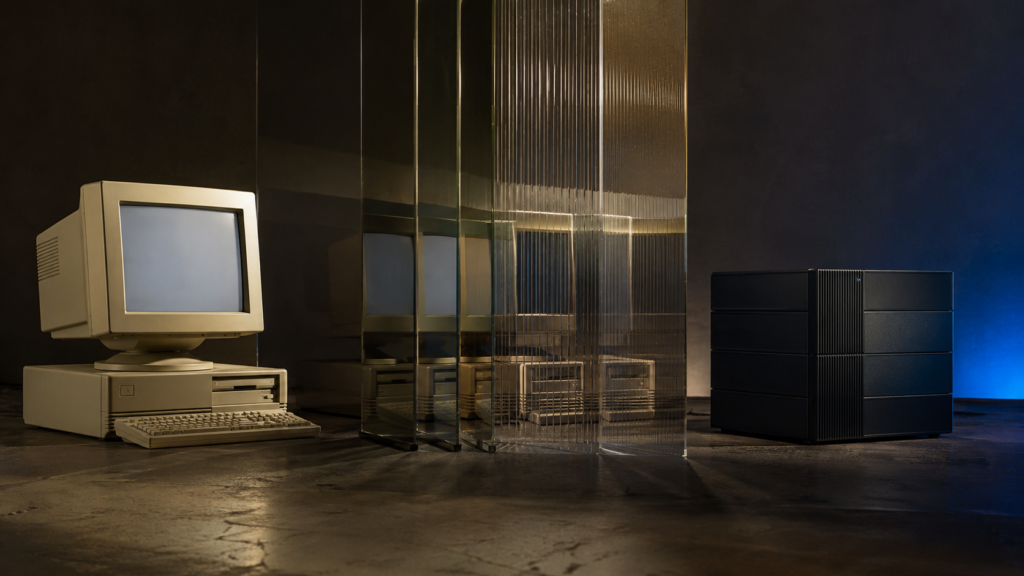
Months are becoming the new technology generation
Windows 95 remained a major reference point for years. Farm machinery often served several generations of one family.
AI now moves through recognizable generations in months.
A preview model released in February may be replaced before harvest. An agent launched in January may become a feature by July. A creative platform can appear in September and close the following April.
This speed creates three different historical clocks:
- Models can retire within months.
- Products can disappear within a year.
- Cultural memory may persist for decades.
Museums usually begin collecting after society agrees that something mattered. AI model preservation may require institutions to collect before that agreement exists.
Waiting for historical consensus could mean waiting until the original system can no longer be recovered. Monday action for a business: list the AI tools your team depends on, and export your own prompts, outputs and settings from each one before a vendor retires it.
This piece sits inside our reference on AI tools for Canadian businesses, which we keep current.