





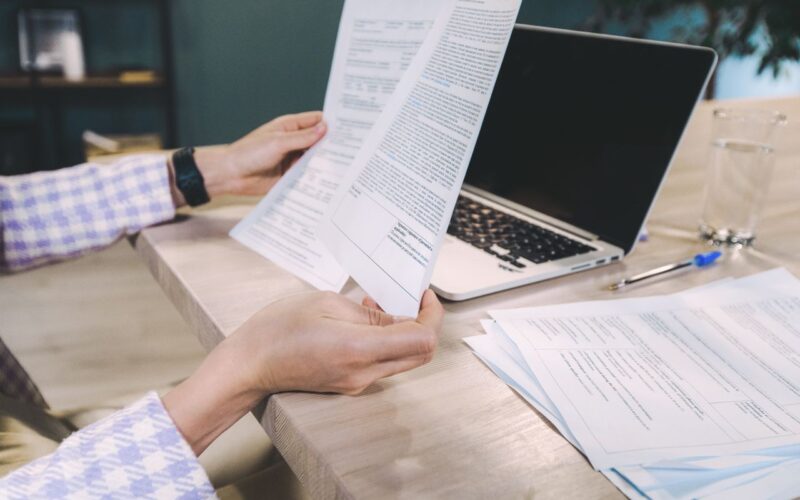
An AI answer about your money is a claim. A claim that cannot point to its proof is an opinion wearing a uniform. The rule for any Canadian firm is simple to state and hard to dodge. Before an AI answer settles a bill or a dispute, each claim in the answer must name its proof, down to the page and the line, or the bank row that carries it.
The short answer: set the proof rule before you ask the question. Every claim ties to a PDF page and line or a bank payment row. Then check 3 proof spots by hand. An answer that passes all 3 spots can carry a dispute note. An answer that fails 1 spot goes back until the proof holds.
How does the proof test run?
Take 1 file your firm argues about often. A year of power bills works. Put the bills on one side and the bank payments on the other, 12 months of each.
Ask the tool to match the 2 sets and state each claim in a form that can be checked. The billed amount for a month ties to a page and a line on that month’s bill. The paid amount ties to a bank row with a date. A claim about a fee or a rate change ties to the page where the term sits.
Then check 3 spots by hand. Pick the largest claim, 1 from the middle of the list, and 1 the tool flagged as unsure, if it flagged any. Open each proof at the page and line named. A spot passes only if the figure, the date and the account all match.
Why does the rule have to come first?
A clean answer invites trust at the exact moment trust costs money. The summary reads well and the totals line up, and none of that shows where a single figure came from. The proof rule changes the order. The answer earns trust claim by claim, at the source, before it earns a signature.
Vendors are building the same idea into their own systems. Google now checks each agent action against your written rules first covers a platform that tests an agent’s action against a firm’s written policy before the action runs. Your proof rule is the reader-side twin. The policy check runs before the act. The proof check runs before the payment. When an agent buys for you, set the authority before the first order sets out why limits get written before an agent spends a dollar. A proof rule is a limit of the same kind. It limits what an answer may settle.
Who carries the duty when the proof fails?
The firm does. A regulator, a utility or a vendor will ask your firm for its records, and the answer your tool gave will not sit in the room as a witness. Rebuilding a public workforce with AI. Copy the training and the guardrails, not the headcount politics covers the guardrails that let a public team defend its work file by file. A private firm owes its own files the same discipline. Keep the proof list with the bill file. Page, line, bank row and the name of the person who checked the 3 spots. That list is the record. The chat window is not.
The rule, in short
An AI answer can sort a year of bills in minutes. Sorting is not proof. Tie each claim to a page and line or a bank row, check 3 spots by hand, and keep the proof list with the file.
Set the deadline this week. Before the next bill dispute lands on your desk, write the proof rule into the instruction your team gives the tool, and name the person who runs the 3 spot checks.
Read next: Google now checks each agent action against your written rules first