



55 Prairie companies now touch 1 AI adoption program. 30 of them built real systems with it. 25 seats are still open, and your neighbouring farm operation is eyeing one.
The program is Amii’s Advanced Technology Projects, run from Edmonton. It places machine learning residents inside Prairie firms. They build custom systems beside your staff, then leave. Your firm keeps the technology, the IP and the people who learned to run both.
The direct answer: $5.6 million in total federal support now funds the program. PrairiesCan put in $2.5 million of new money on October 27, 2026. That money opens 25 new seats for businesses in Alberta, Saskatchewan and Manitoba. A firm with years of operating data and one costly, repeated decision should apply before the seats fill.
- What the seat gives you
- Read the crop map before you apply
- Three Prairie routes, three honest prices
- Decide this week
What the seat gives you
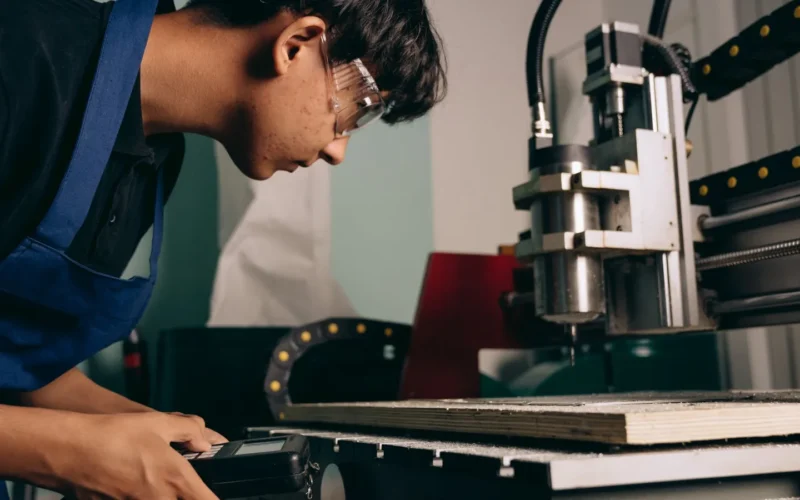
You get people, not software. An embedded resident works inside your operation for the length of the project. Your staff work beside the resident and learn the system as it is built. When the project ends, the model stays, the code stays and the skill stays.
The record so far is concrete. 30 regional firms have partnered with Amii since the 2024 launch. The work sits in energy, agriculture and manufacturing, the three sectors the new money targets. Each project starts from a decision the firm already makes badly and at cost.
The seat also sits inside a wider door. PrairiesCan opened its expanded Regional Artificial Intelligence Initiative on October 22, 2026, with $700 million in federal funding nationally. The Amii seats are the hands-on end of that money. The initiative end of it takes applications until December 31, 2030. A firm that misses a seat this round has a second route to price.
Read the crop map before you apply
Croptimistic already sits in one of these seats. The firm reads crops from the air. Its SWAT Maps system uses computer vision for early-season cereal crop prediction. The map reads, in plain terms, which parts of a field will grow and which will not, weeks before your eyes can tell.
Other seats hold other kinds of work. A forestry firm classifies streams from 20 years of field data, with predictive accuracy up to 90%. An Edmonton platform firm added AI to a product it already sells. A gas operator uses reinforcement learning on well output. Every case started with data the firm already owned.
What the first 30 firms prove
Read the early projects as a pattern, not a trophy list. Carson Integrated brought 20 years of forestry field data. The project turned that record into a stream classification tool with predictive accuracy up to 90%. The data came first. The model came second.
Visionstate brought a live product. Its WANDA platform already monitored facilities for commercial clients. The project added AI features to that platform and produced two commercial products. Riva, an Edmonton enterprise software firm, was an early beneficiary of the same federal stream. It added AI to a platform its customers already used.
The gas well project brought machine logs. Reinforcement learning now tunes operations the firm used to tune by hand. Four different sectors share one trait. Each firm arrived with records, not ideas. That trait is the real admissions test, whether the program prints it or not.
Three Prairie routes, three honest prices
A Prairie owner has three public routes into AI help this fall. Each route buys a different thing.
The Amii seat buys a build. Average the federal support across the 55 firms and you get about $100,000 of public support per seat. Amii’s new Prairie AI seats are worth about $100,000 each. Bring old data works through that arithmetic and ranks which firms fit best.
A Mitacs placement buys supervised help on one defined project. Mitacs AI Advantage starts at $5,000, and the real cost is supervision prices the firm’s own share and the hours your staff must give the intern.
The other routes buy judgment about tools, not builders. BDC Mission AI will vet Canadian AI tools while BDC backs 300 AI firms tests Canadian tools with owner panels. The Chamber AI Adoption Program averages $270 a business. Only 540 get hands-on cohorts spreads a thinner layer of help across far more firms.
Pick by need. A broken workflow wants a build. A short project wants a placement. A tool choice wants a test.
Decide this week
Do one thing before Friday. Name the one decision your firm makes every week that costs money when it goes wrong. Write down where the data for that decision lives and how many years of it you hold.
If you hold three or more years of usable records, apply for a seat while the 25 are open. If your records are thin, fix the records first and take a placement in the spring. Either way, the data audit comes before the application. That is the whole lesson the first 30 firms bought for you.