


PC Chat reached Quebec on November 2, 53 days after its English launch, and that gap shows what any Canadian firm should test before a French AI chatbot goes live.
Loblaw’s two announcements lean on the same three promises: more than 1,000 reviewed Canadian clinical sources, a Clinical AI Advisory Committee of Canadian health professionals, and conversations kept in Canada. Neither release puts a number on how closely the French answers track the English ones, or says which province holds the chats. A clinic, retailer or software firm planning its own French AI chatbot should run both checks before launch day.
Key points
What changed for PC Chat on November 2?
On November 2, PC Health made PC Chat available in French to Quebec users in the PC Health and Pharmaprix apps and on their websites. The pitch did not change: free health information drawn from Canadian clinical sources, help working out which professional to see, and chats kept in Canada. Quebec was not part of the September launch.
The September 10 launch release said the chat would come to New Brunswick and Quebec “later this fall”, after adaptation and testing aimed at an equivalent experience in French. The November 2 release covers Quebec only. It also cites a Harris Poll that PC Health commissioned: 48% of Quebec respondents said they trust health information from AI tools, against 40% nationally. That survey reached 1,535 adults, 363 of them in Quebec, so treat it as a vendor’s own reading of demand.
Loblaw’s PC Chat data and security FAQ, dated September 4, adds that conversations are not used to train AI models. Chats are kept for as long as the service and the law require, with no number of days given, and self-serve deletion is still being built.
What does a French AI chatbot owe a Quebec customer?
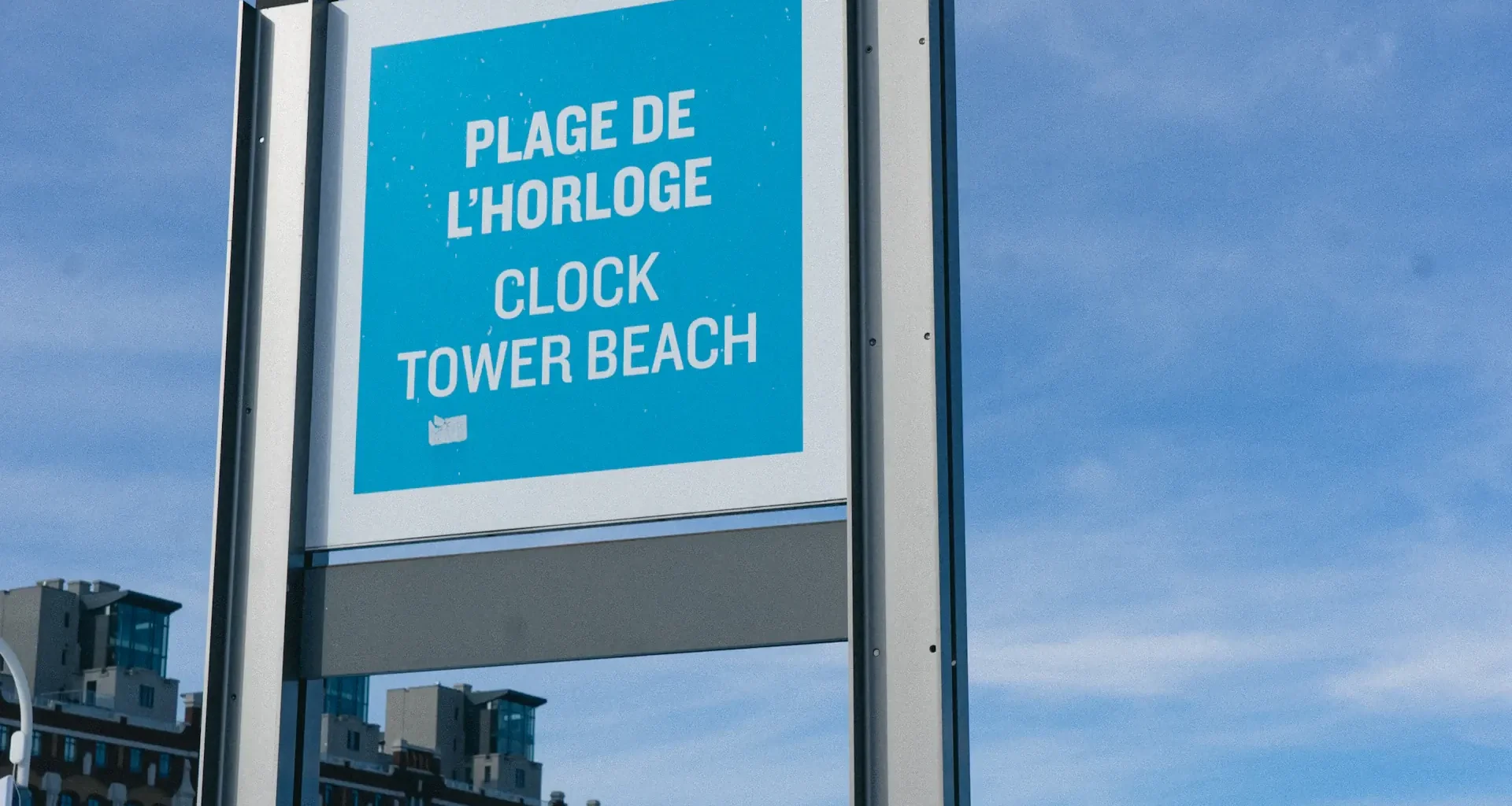
A French AI chatbot serving Quebec consumers has to inform and serve them in French. Sections 5 and 50.2 of the Charter of the French language put that duty on any enterprise selling goods or services to consumers. The answers, the handoff to a person and the terms a user accepts all count as much as the welcome screen.
Section 52.1 of the Charter of the French language goes further for software: a French version must exist, and any other language version may be offered only if the French one comes on terms no less favourable, with technical characteristics at least equivalent. Whether a chat window on a website counts as software under that section is a question for your counsel. Section 55 is plainer. Terms drawn up in advance by one party, the kind a user clicks to accept, must be offered in French first.
Parity is harder for a chatbot than for a brochure. A retrieval assistant answers from a library of source documents, so if that library is mostly English, a French question can come back built from English material and translated on the way out. Loblaw’s September target, an equivalent experience, names the right goal; neither release says how equivalence was measured. The pattern is familiar: Siri AI also launched in English only, with French promised a month later.
Does “stored in Canada” answer the Quebec privacy question?
No. Quebec’s private sector privacy act, as amended by Law 25, draws its line at the Quebec border rather than the Canadian one. Section 17 says an enterprise must assess the privacy risks before any personal details go outside Quebec, including when a provider outside the province keeps them for you, and the outcome has to be written into an agreement.
Section 8 of the Act respecting the protection of personal information in the private sector also requires telling people when their information could be communicated outside Québec. Health details count as sensitive under section 12, which ties some uses to express consent. A server in Toronto is inside Canada and outside Quebec at the same moment.
Loblaw’s public pages say “Canada” and stop there. We do not know where PC Chat’s servers sit, and nothing we read suggests Loblaw skipped an assessment. The risk belongs to the smaller firm that copies the phrase onto its own launch page and treats the job as finished. Our piece on why data location reached the boardroom agenda covers the national side; Quebec adds a provincial layer on top.
| What PC Health says | What to ask your own vendor |
|---|---|
| Chats kept in Canada | Which province? Does any provider outside Quebec store or process them (section 17)? |
| French built for an equivalent experience | Equivalent on what measure, and who scored the French answers? |
| No training on chats | Does the model provider’s own log policy say the same in writing? |
| Kept as long as needed | How many days, and can a user delete a chat today without a form? |
Is a two-language test overkill for a small clinic?
A full parity study is overkill for a clinic with a handful of staff. The fair version of that argument is about proportion, and the law agrees with it: section 3.3 of the privacy act says an assessment should match the sensitivity, purpose and quantity of the information involved. The duties still apply to a two-room clinic, so shrink the test and keep it.
Launching English first elsewhere, as PC Health did, has a fair defence. A bilingual library takes time to source and review, and the September release described the French work as adaptation and testing. That sequence deserves credit.
Nobody outside Loblaw has scored the French answers
We have not used PC Chat in either language, so we cannot tell you whether its French answers match its English ones. Neither release reports an accuracy figure for either language, and the releases describe the advisory committee’s role without publishing its review. So the 53 days tell us about the schedule and nothing yet about quality.
Our report on what Canada’s privacy commissioners now ask of health AI projects shows where regulators are heading, and a consumer health chatbot’s privacy promise has hit this limit before: the vendor page describes the product, and your own policy covers what people type into it.
Twenty questions, asked twice
The cheapest check on a French AI chatbot uses questions you already have. Pull 20 real ones from last month’s customer emails or calls, including a few awkward ones. Ask each in English and in French, in separate sessions, and have a bilingual staff member score every pair on one point: does the French reply send the person to the same next step as the English one?
- Pass mark: 20 of 20 pairs reach the same next step, and no French question gets an English reply or an English-only link.
- Trigger the handoff in French and confirm that the person or form on the other end works in French.
- Open the terms screen in French and read it before anyone on your team clicks accept.
- Send the vendor one written question: in which province are chats, logs and backups kept, and does any subprocessor sit outside Quebec? A yes means the section 17 assessment comes before launch.
- Time box it: one afternoon for the questions, one week for the vendor’s written reply.
If your French AI chatbot fails the pairs test, start with the source library, since a retrieval assistant can only draw on the documents it holds. More of our reviews of AI tools for Canadian teams sit on our AI tools hub for Canadian businesses.
Our view: PC Health brought PC Chat to Quebec once the French version was ready, which is the right order. Copy that order for your own French AI chatbot, then do the measuring a press release never shows, and keep the scored pairs on file for the next update.
FAQ
Does a French AI chatbot have to launch in Quebec on the same day as the English one?
The Charter of the French language does not set launch dates. It lets consumers insist on French information and service (sections 5 and 50.2) and expects a French version of software on terms no less favourable (section 52.1). PC Chat sidestepped the issue by reaching Quebec only once its French version was ready on November 2, 2026. Ask counsel how the rules apply to your product.
Is “stored in Canada” enough under Quebec’s privacy law?
A Canadian storage promise does not settle it. Section 17 of Quebec’s private sector privacy act calls for a privacy impact assessment and a written agreement before personal details leave Quebec, and a data centre in another province is outside Quebec.
Does PC Chat use conversations to train AI models?
Loblaw’s PC Chat data and security FAQ, dated September 4, 2026, says conversations are not used to train AI models. It keeps chats as long as the service and the law require, without a fixed number of days, and deletion currently runs through a privacy request form.
How long does a French and English chatbot test take?
About one afternoon for 20 real customer questions asked in both languages and scored by a bilingual staff member, plus a week for the vendor’s written answer on where chats and logs are kept. Our AI tools hub lists other checks for Canadian buyers.
Checked on November 2, 2026 against Loblaw’s November 2 and September 10 releases, the PC Chat data and security FAQ, Loblaw’s Consumer Health Privacy Notice (effective September 30, 2026) and LégisQuébec’s consolidated Charter of the French language and private sector privacy act (current to October 15, 2026). We have not used PC Chat.