




England is handing its AI planning tool to the officer who decides. Burnaby handed its AI building permit review to the applicant, along with two sets of terms that read differently on training.
Two governments put AI into housing approvals this year and chose opposite sides of the counter. On October 30, England’s Ministry of Housing, Communities and Local Government said its PlanAssist tool, built with Google DeepMind, will move from three trial councils to 15 for 12 months as an aid to planning officers. Burnaby’s AI building permit review, called AI PreCheck, reached full launch in July and serves the other side: the homeowner, builder or designer uploads drawings and gets a zoning report back within two business days.
Both tools promise faster answers. What differs is the paperwork. An officer’s tool lives inside a contract a council negotiated once. An applicant’s tool lives inside whatever each applicant accepted on the way in, and in Burnaby that means two documents that a designer should read together before a client uploads a single sheet.
England gives the AI to the officer, Burnaby to the applicant
PlanAssist was developed with Google DeepMind, Google Cloud, the consultancy Faculty and local authorities, and trialled in Camden, Barnet and Dorset. It pulls an application, the local policies and the site constraints into one view, and DeepMind’s own description says it drafts cited reports that officers can edit before a decision. The government’s October 30 release is careful on the point that matters most: “Planning officers remain responsible for reviewing applications and making decisions.”
The headline figure deserves the same care. The release says early testing trimmed officers’ time on key tasks by 58%, and ties that to a goal of halving routine householder decisions from eight weeks to four. DeepMind’s post puts it as “up to 58%”. Both numbers come from the parties that built and bought the tool, measured across three councils. The 12-month expansion, which adds councils such as Westminster City Council, is where the figure will either hold or soften. The government wants PlanAssist on offer to all English councils by late 2027, and the release states plainly that it “will not be mandated software”.
Burnaby’s program took the applicant’s route. Council approved a pilot in December 2024, the pilot opened on March 28, 2025 for R1 single-family dwellings and laneway homes, the tool opened to all public applicants on September 25, 2025, and duplexes became eligible on July 2, 2026. Part of the money comes from the CMHC Housing Accelerator Fund, according to the City, and a program review is set for 2027. City plan checkers still review submissions for the BC Building Code. AI PreCheck covers objective zoning rules, and the City says it does not replace a professional designer.
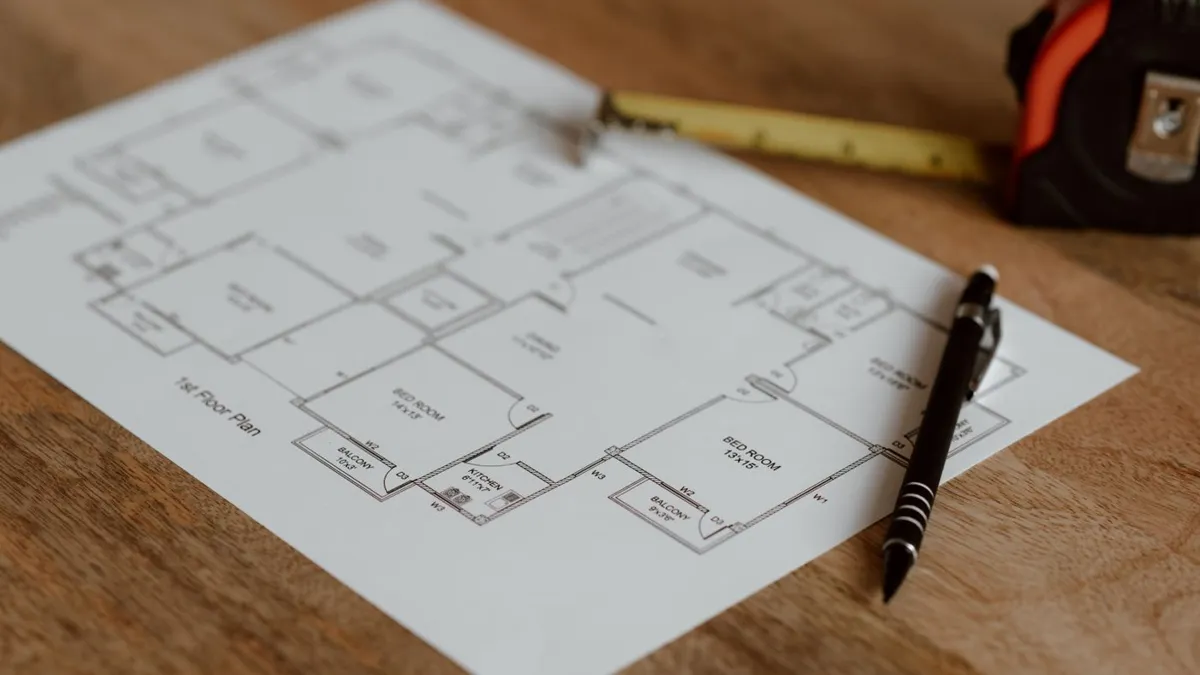
Two documents govern one upload
The City’s page publishes its own terms and says they, “along with Archistar terms of use”, are binding on anyone who uses AI PreCheck. Section 5 of the City Terms has the uploader grant the City and Archistar a non-exclusive, royalty-free licence to use the drawings for four purposes. The last of them is to “Train and improve AI PreCheck’s performance”, including detecting doors, windows and room types. The City’s FAQ repeats it in plain words: Archistar and the City “may use your drawings to train” the tool, though not to create new building plans.
Archistar’s Canadian user agreement reads the other way. Uploaded content is not “used to train the AI unless you give your express written consent”. We found no clause in either document that says which one prevails when they differ. Perhaps accepting the City’s licence is meant to be that consent; neither text says so, and a click-through acceptance is an odd thing to describe as express written consent.
Whose drawings are they to license?
Both texts assume the person uploading holds the rights. In residential work that assumption often fails. The homeowner or builder applies for the permit, while the drawings come from a designer or an architect. Under section 13 of the federal Copyright Act, copyright first belongs to whoever created the work, unless an employment relationship or an agreement says otherwise, and a licence of copyright is valid only in writing signed by the owner or an authorized agent.
So a client who uploads a designer’s set to AI PreCheck warrants rights the client may not have, and grants a training licence the designer never signed. We wrote about a similar problem with a model licence that follows every copy: the terms attach to the file, wherever it travels. Title blocks raise a second issue. Archistar’s agreement bars personal information, and permit sets often carry the owner’s name and address.
Why a builder might use the AI building permit review anyway
The argument for using the tool is strong, and the City has made it honestly. AI PreCheck is optional, the report arrives in two business days, and zoning errors caught before submission are cheaper than errors caught by a plan checker weeks later. The training purpose is narrow on the City’s own description, aimed at recognising doors, windows and room types, and the City says drawings will not be used to create new plans. For a builder repeating a standard R1 design through the AI building permit review, the licence costs little and the time saved is real.
The calculation changes for a custom designer whose drawings are the product, and for anyone who reads “express written consent” as a promise the vendor made. For them, the question is less whether AI should check zoning and more which of two published texts they are relying on. It is the same choice website owners now face over AI training, which we covered in the new one-line AI training opt-out: the default decides, unless someone says otherwise in writing.
What England’s choice tells a Canadian city
An officer-side tool keeps the data terms between a government and its vendor, where a council can negotiate training rights once on behalf of every applicant. An applicant-side tool pushes those terms onto each user, one acceptance at a time. Both can keep a person on the final decision, a principle Ottawa applies to its own riskiest automated decisions, as we noted when Ottawa put a human on the final AI call. They differ on who carries the paper risk.
Canadian municipalities weighing an AI building permit review will copy one design or the other, and that choice is a piece of AI policy in Canada made at city hall. A council choosing between the two models should decide in its procurement file whether submissions may train the vendor’s system, and publish that answer in one place.
Burnaby’s 2027 review is the place to settle it
The City’s scheduled 2027 review, which will decide whether the program moves to regular operations, is the natural moment to publish one sentence on which text governs training, and to offer the AI building permit review without the training licence. Until then, a designer whose drawings may end up in AI PreCheck can add a line to the service agreement stating who may upload the set and whether training is permitted, and counsel can say whether that line is enough. The open question belongs to the City of Burnaby, whose FAQ answers it one way while its vendor’s agreement answers it another.
FAQ
What is Burnaby’s AI PreCheck?
AI PreCheck is the City of Burnaby’s optional AI building permit review tool, built by Archistar. Applicants upload drawings for R1 single-family homes, laneway homes, secondary suites or duplexes and receive a report on over 50 zoning rules within two business days.
Do I have to use AI PreCheck to get a building permit in Burnaby?
No. The City says AI PreCheck is optional, and an applicant who does not use it can submit a building permit application without giving consent to its terms.
Are drawings uploaded to AI PreCheck used to train AI?
The City’s terms and FAQ say the City and Archistar may use uploaded drawings to train and improve the tool, for example to detect doors, windows and room types. Archistar’s Canadian user agreement says uploads are not used to train the AI without express written consent. Neither text says which governs.
How is England’s PlanAssist different from Burnaby’s AI PreCheck?
PlanAssist is used by council planning officers, who stay responsible for decisions, and is expanding to 15 English councils for 12 months. AI PreCheck is used by applicants before the City reviews a permit, so each applicant accepts the City’s and Archistar’s terms directly.
Does an AI PreCheck report mean my permit will be approved?
No. The City’s terms say results are not approval and that the City keeps sole discretion over permits. City staff still review applications, including for the BC Building Code.